How Poor Crawl Space Insulation Impacts Indoor Air Quality?
admin-hrfoam
December 13th, 2025
Poor crawl space insulation installation directly degrades indoor air quality by allowing moisture, mold spores, and soil gases to enter your living space. This happens through a process called the “stack effect,” where warm air rising in your home pulls cool, contaminated air up from the crawl space. Research indicates that up to 50% of the air you breathe on the first floor of your home originates from the crawl space, meaning that whatever is under your floorboards eventually ends up in your lungs.
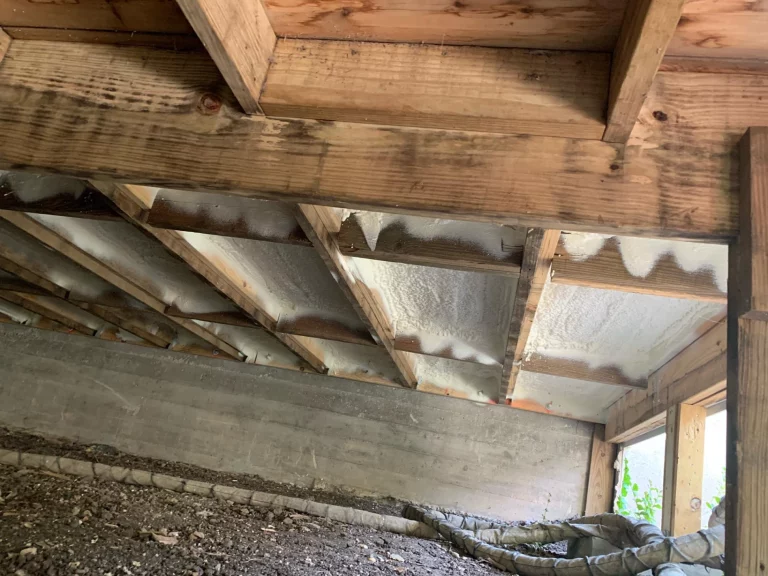
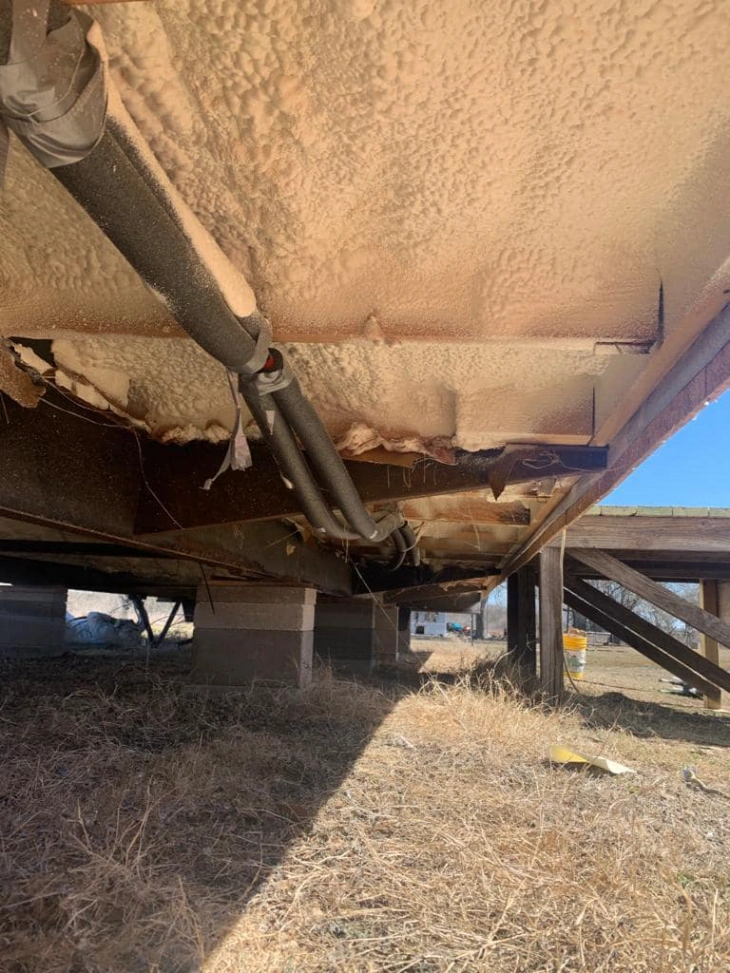
If your crawl space relies on outdated fiberglass insulation or lacks a proper moisture barrier, it is likely a breeding ground for biological contaminants rather than a protective shield. Fiberglass absorbs moisture like a sponge, leading to mold growth and wood rot, yet fails to block radon gas and pest entry. To protect your indoor environment, the solution involves removing damaged materials and installing an air-impermeable insulation system, such as spray foam or full encapsulation, which physically seals the home from the ground below.
At H & R Spray Foam Insulation, we have seen firsthand how correcting these sub-floor issues can transform a home’s health. When you control the air below your house, you control the quality of the air inside it.
The Stack Effect: How Downstairs Air Moves Upstairs
Understanding the movement of air is the first step to solving air quality issues. Buildings behave like chimneys. In winter, heated air rises to the upper levels and escapes through the attic. This upward movement creates a vacuum at the bottom of the house, sucking replacement air in through the crawl space vents and cracks in the floor.
This constant suction pulls more than just air. It drags humidity, odors, and microscopic particles up through penetrations around plumbing pipes, electrical wires, and ductwork. If the crawl space is damp or dirty, that “make-up air” carries pollutants directly into your kitchen, living room, and bedrooms.
According to the Department of Energy, properly controlling this airflow is essential for energy efficiency, but it is equally vital for health. Sealing these bypasses stops the cycle of contamination.
Specific Pollutants That Enter via the Crawl Space
When insulation fails to seal the subfloor, three main types of contaminants invade the home.
Mold and Mildew Spores
Moisture is the primary enemy of indoor air quality. Vented crawl spaces allow humid outdoor air to enter. When this warm air hits cool surfaces like water pipes or concrete walls, condensation forms. Fiberglass insulation absorbs this water, becoming heavy and sagging away from the subfloor.
Wet fiberglass creates a perfect environment for mold. As these fungi grow, they release spores into the air, which is driven by the stack effect. The EPA notes that biological contaminants like mold are significant triggers for asthma and allergic reactions. If your home smells musty, that scent is essentially the “fumes” of active mold growth entering your living space.
Soil Gases and Radon
Radon is a naturally occurring, radioactive gas that comes from the breakdown of uranium in soil. It is odorless, invisible, and the second leading cause of lung cancer in the United States. In homes with poor insulation and no vapor barrier, nothing prevents radon from rising from the ground and seeping through the floorboards.
A standard fiberglass batt offers zero resistance to gas. In contrast, a closed-cell spray foam application or a sealed encapsulation system creates a physical barrier that significantly reduces soil gas entry.
Pest Waste and Allergens
Sagging insulation provides an ideal nesting material for mice, rats, and insects. Once pests establish a colony in the fiberglass, their urine and droppings dry out and break down into microscopic particles. These allergens then ride the air currents into the home. Keeping the crawl space sealed and using insulation that pests cannot eat or nest in, like spray foam, removes this risk.
Comparison: Insulation Materials and Air Quality
Choosing the right material is not just about R-value (thermal resistance); it is about air sealing. The table below compares how common materials impact indoor air quality (IAQ).
Feature
Fiberglass Batts
Cellulose
Closed-Cell Spray Foam
Encapsulation System
Air Seal Quality
Poor (Air passes through easily)
Moderate (Densely packed but permeable)
Excellent (Forms an air-tight seal)
Superior (Seals entire space)
Moisture Resistance
Low (Absorbs water, supports mold)
Low (Absorbs water, heavy when wet)
High (Waterproof, rejects moisture)
High (Vapor barrier stops moisture)
Pest Deterrent
Poor (Used for nesting)
Moderate (Treated with borates)
Good (Too hard to nest in)
Excellent (Physically blocks entry)
Mold Risk
High
High (If wet)
None (Inorganic material)
None (Controls humidity)
Radon Barrier
None
Low
High
High
Market Data: The Cost of Poor Air Quality
The impact of neglecting crawl space health is measurable.
Time Indoors: The EPA reports that Americans spend approximately 90% of their time indoors, making the quality of indoor air a major determinant of health.
Asthma Triggers: Dust mites, which thrive in humid environments created by poor crawl space insulation, are the leading cause of chronic asthma cases.
Air Origin: As noted earlier, building science research confirms that 40% to 50% of the air on the first floor originates from the crawl space.
Things to Consider Before Making a Decision
Before you choose a solution for your crawl space, evaluate these factors to ensure you address the root cause, not just the symptoms.
Water Management First: Insulation cannot fix standing water. If your crawl space floods during rain, you must install a perimeter drain or sump pump before adding new insulation.
Current Damage: Check your floor joists for rot. Spray foam applied over rotting wood seals the rot in and hides structural damage. Repair the wood first.
Mechanical Systems: If your furnace or ductwork is located in the crawl space, air sealing is even more critical. Leaky ducts will pull contaminants directly into the HVAC system and blast them into every room.
Termite Inspection: In some regions, inspection codes require a “view strip” on foundation walls. Ensure your chosen insulation method allows for future termite inspections.
Bonus Tip: Purchase a simple digital hygrometer with a remote sensor. Place the sensor in the crawl space and keep the display in your kitchen. If the relative humidity down there stays above 60% for long periods, you likely have a mold problem developing.
Summary
Poor crawl space insulation is a silent contributor to respiratory issues, allergies, and general discomfort in the home. The “stack effect” ensures that whatever exists in your crawl space, be it mold, radon, or pest waste eventually enters your living area.
Fiberglass batts are insufficient for blocking these contaminants. To ensure a healthy indoor environment, you must stop the airflow from the ground up. Methods like closed-cell spray foam or complete encapsulation provide the physical barrier needed to separate your home from the earth below.
Review your current situation. If you see falling insulation or smell mustiness, your crawl space is compromising your air quality. Addressing this now prevents long-term health risks and structural damage.
Ready to Improve Your Home’s Health?
Don’t let your crawl space compromise your family’s health. H & R Spray Foam Insulation specializes in diagnosing and fixing sub-floor air quality issues. We can remove old, contaminated insulation and replace it with high-performance insulation solutions that seal out moisture and pollutants for good.
Call us for a consultation and take the first step toward cleaner, safer indoor air.
Frequently Asked Questions
Will spray foam insulation off-gas and hurt my air quality?
When applied correctly by professionals, spray foam is inert once cured (usually within 24-48 hours). After this brief period, it actively improves air quality by blocking outside pollutants. Always ensure your installer follows safety protocols during application.
How does encapsulation differ from standard insulation?
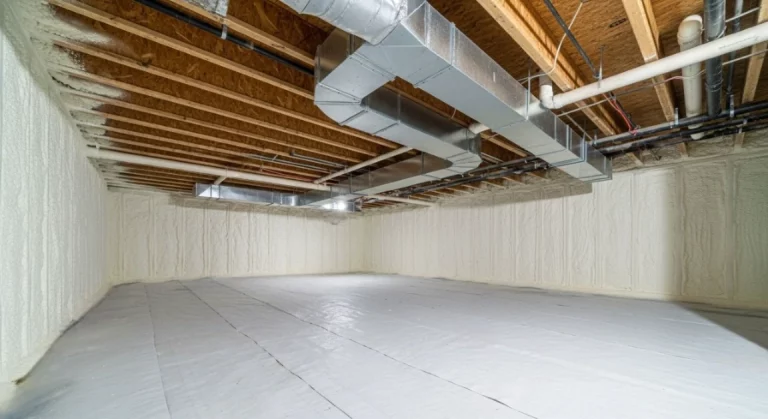
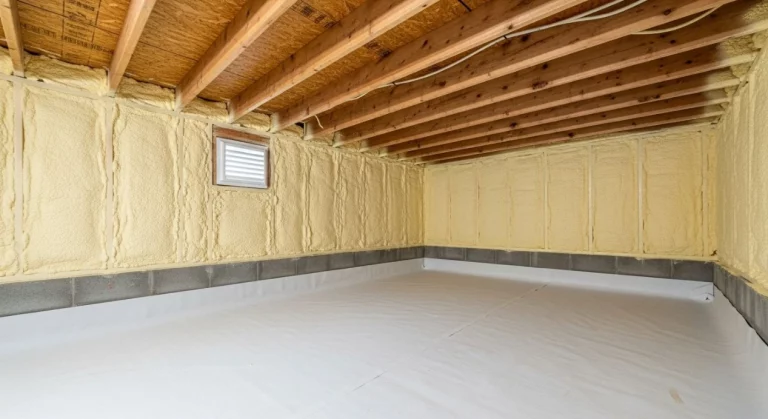
Encapsulation treats the crawl space like a mini-basement. It involves sealing the vents, insulating the foundation walls, and covering the dirt floor with a thick vapor barrier. Standard insulation usually just involves sticking fiberglass between the floor joists. Encapsulation is far superior for air quality control.
Can I just put new insulation over the old fiberglass?
We strongly advise against this. The old fiberglass is likely filled with dust, pest waste, and mold spores. Covering it up just traps those contaminants. You must remove the dirty material and sanitize the area before installing new insulation.
Does a sealed crawl space increase radon levels?
It can if not done correctly. However, a properly sealed crawl space with a passive or active radon mitigation system is the most effective way to lower radon levels. The sealing blocks the gas, and a vent pipe provides a safe path for it to escape above the roof.
Sources
Department of Energy – Information on insulation types and their role in energy efficiency and home health.
EPA – Indoor Air Quality – Overview of indoor air quality concerns, including biological contaminants and mold.
For property owners, crawl space encapsulation in Pflugerville, TX typically offers superior long-term protection and efficiency compared to standard insulation…


 ES
ES