5 Warning Signs Your Crawl Space Insulation Has Water Damage
admin-hrfoam
December 13th, 2025
If a home has a crawl space, that area acts as the barrier between the ground and the living space above. When the insulation in this critical area absorbs moisture, it fails quickly, leading to costly issues inside the house. The five most immediate signs that crawl space insulation has water damage are visible sagging or discoloration, persistent musty odors, increased pests, higher utility bills, and fungal or mold growth.
Water damage in a crawl space is not just an insulation problem; it is a structural and air quality issue. Addressing these warning signs promptly protects the building structure, maintains healthy indoor air quality, and prevents unnecessary energy waste. This guidance, drawn from years of experience in moisture management and insulation, explains how to spot these problems early and outlines the practical steps for remediation.
Spotting the Five Red Flags of Moisture Damage
Identifying water damage requires regular inspection, as the crawl space is often forgotten until issues start appearing upstairs. Look specifically for changes in the insulation’s appearance and the surrounding environment.
1. Visual Changes: Sagging or Discoloration
Traditional fiberglass batts are the most common type of insulation found in older crawl spaces. These materials absorb water like a sponge. When water infiltrates the area, the insulation quickly becomes saturated, adding significant weight. This excess weight causes the batts to pull away from the subfloor joists and sag down, often dropping entirely to the ground.
Discoloration is another major visual clue. If the insulation, mainly fiberglass or similar materials, turns yellow, brown, or dark gray, it indicates prolonged exposure to dirty water, soil moisture, or fungal growth. Once insulation sags or becomes visibly stained, its thermal resistance (R-value) drops to near zero, meaning it no longer protects against heat transfer.
Bonus Tip: Check areas directly beneath plumbing lines, bathroom stacks, and exterior walls where gutter runoff might accumulate. These locations are the first spots where water intrusion will be evident.
2. Musty Odors and Air Quality Issues
One of the most immediate indicators of water damage in the main living area is a persistent, musty, or earthy smell. This musty odor is the smell of microbial volatile organic compounds (MVOCs) released by actively decaying materials and growing fungi in the dark, moist crawl space environment. Since about 40% of the air in a home can move up from the crawl space through a process called the stack effect, those odors and biological particles are pulled directly into the house.
According to the National Environmental Health Association, moisture problems in homes significantly contribute to poor indoor air quality and respiratory issues. If you notice this smell most strongly near vents or floor registers, the air quality problem is almost certainly originating below.
3. Pests and Rodent Activity
Rodents, insects, and other pests seek out damp, protected spaces for nesting. Waterlogged, sagging insulation provides an ideal habitat for rats, mice, and various insects. Water damage also creates pathways for pests to enter by rotting wood or deteriorating foundation materials.
Look for physical signs of intrusion, such as tunnels or pathways dug into the insulation; droppings on or near the insulation; and nesting materials (shredded paper, bits of fabric) woven into the insulation fibers. Pests often further destroy insulation by trampling it or using it as a source of material, accelerating moisture accumulation and breakdown.
4. Higher Utility Bills and Drafts
Insulation’s main job is to restrict heat flow. When insulation is saturated with water, its ability to stop heat transfer virtually disappears. Water conducts heat far better than dry air or insulating fibers. Homeowners often notice a sudden, unexplained jump in heating costs in winter or cooling costs in summer. The HVAC system works much harder trying to compensate for the significant heat loss or gain through the now-uninsulated floors.
Another sign is experiencing drafts or extreme temperature differences on the floor. If certain sections of the floor feel unusually cold or clammy during winter, it points directly to an area where the insulation is compromised by moisture.
Bonus Tip: Use an infrared thermometer to scan the floor surface on a cold day. Areas showing temperatures significantly lower than the rest of the room likely sit above damp or missing insulation.
5. Mold or Fungal Growth
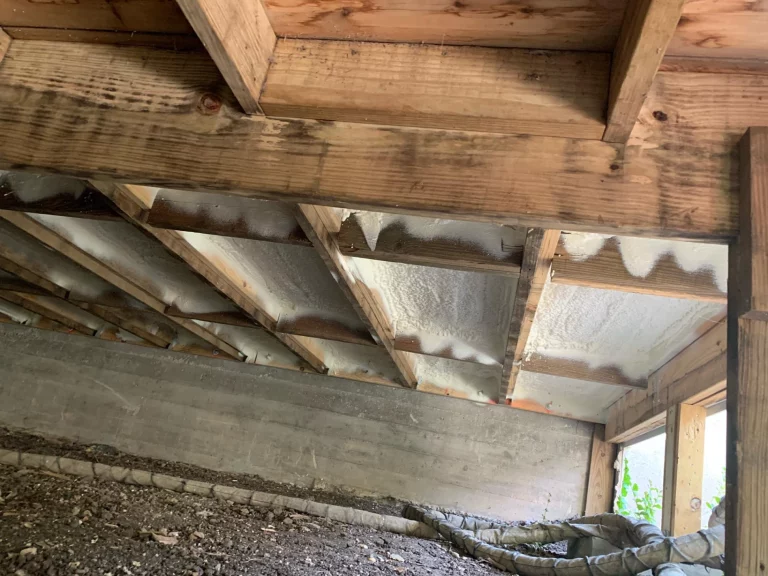
Visible mold, mildew, or fungal growth on the insulation, wood joists, or subfloor materials confirms severe, prolonged water exposure. Mold requires moisture, food (like wood or organic dirt embedded in fiberglass), and moderate temperatures to thrive. In a dark crawl space, excessive humidity or standing water creates the perfect breeding ground.
Fungi can appear as black, green, white, or gray fuzzy patches or slick films. The presence of wood rot (often indicated by brittle, splintered, or soft-to-the-touch joists) suggests that the home’s structural integrity is being compromised, not just its insulation.
Addressing the moisture source and removing compromised insulation is the priority, but selecting a material that can withstand high humidity and occasional water contact is equally essential for long-term remediation.
Evaluating Insulation Options for Wet Environments
When repairing water damage, choosing the right material is essential to prevent recurrence. Materials vary widely in how they react to humidity and direct water contact. The Department of Energy notes that selecting materials that resist moisture absorption helps ensure long-term thermal performance, especially in humid or flood-prone regions.
Insulation Type
Water Resistance
Typical R-Value (per inch)
Use Suitability in Crawlspaces
Fiberglass Batts
Poor (Absorbs water, fails)
3.0 – 4.0
Only recommended when installing a full vapor barrier
Open-Cell Spray Foam
Moderate (Absorbs liquid water)
3.5 – 3.7
Not ideal if frequent flooding is a risk
Closed-Cell Spray Foam
Excellent (Blocks water and vapor)
6.0 – 7.0
Superior choice; acts as an air barrier and a vapor barrier
Mineral Wool Batts
Better than fiberglass, but still absorbs
3.0 – 3.3
Acceptable in dry climates if sealed well
Why Crawl Spaces Get Wet
Water intrusion usually stems from two main sources: bulk water (like rain or leaking pipes) and high humidity. In Texas and other humid southern regions, preventing moisture accumulation is paramount. High outdoor humidity infiltrates the cooler crawl space air, condensing on surfaces and soaking insulation. Bulk water enters due to poor exterior grading, missing gutters, or foundation cracks. Addressing the source of water is always step one; replacing the insulation is step two.
Things to Consider Before Making a Decision
Before deciding on an insulation replacement strategy, a thorough assessment is needed. Simply tearing out the wet insulation and replacing it without addressing the moisture source guarantees the problem will return quickly.
First, assess the extent of the water damage to the subfloor and structure. If there is extensive mold or wood rot, structural repairs and mold remediation must precede insulation installation. Second, evaluate the drainage around the home’s foundation. Ensure gutters are clean and direct water at least six feet away from the foundation. Third, determine the humidity level within the crawl space using a hygrometer. If humidity consistently exceeds 60%, encapsulating the crawl space with a heavy-duty vapor barrier and installing a dehumidifier is usually the correct path. This systemic approach treats the environment, not just the symptom.
Taking Action to Protect Your Home
Moving forward from diagnosis requires a clear plan. Ignoring symptoms such as persistent musty odors, drooping batts, or rising energy costs only allows the underlying moisture issue to worsen, leading to costly structural and air-quality concerns. To ensure long-term home health, homeowners must focus on three steps: First, accurately evaluating the specific damage; second, understanding and correcting the source of the water; and third, selecting the right moisture-resistant material for lasting remediation.
Next Steps for Crawl Space Evaluation
When dealing with moisture-compromised insulation, an expert evaluation ensures all sources of water are identified and corrected, preventing future damage. For detailed inspection and professional advice regarding insulation materials designed to resist humidity and water intrusion, contact H & R Spray Foam Insulation. The team offers expertise in selecting and installing high-performance insulation solutions tailored to specific regional moisture challenges. Reach out via email at [email protected] or call (979) 325-2419 to discuss your crawl space needs. Protecting the foundation starts below the floorboards.
Frequently Asked Questions About Crawl Space Moisture
Why is my crawlspace colder than the outside air?
In summer, cooler ground temperatures keep the crawlspace air cooler than the hot, humid outdoor air. When warm outdoor air enters the cooler space, the moisture in it condenses onto cooler surfaces (such as plumbing, ducts, and insulation), resulting in excessive dampness and high humidity. This condensation is often mistaken for a leak.
Does venting the crawlspace help or hurt?
Venting a crawlspace, especially in humid climates, often does more harm than good. Vents allow moisture-laden air to enter and condense, worsening the problem. Modern building science generally recommends sealing and conditioning the crawlspace (encapsulation) rather than venting it, a measure that can reduce the potential for moisture-related issues by up to 15%, according to studies of building performance metrics.
How long does it take for mold to grow on wet insulation?
Mold can begin to colonize and grow visibly on damp surfaces within 24 to 48 hours, depending on temperature and the availability of food sources. This rapid growth timeframe is why immediate removal of compromised insulation and fast drying of the structure are essential.
Can spray foam insulation get water-damaged?
Closed-cell spray foam insulation does not absorb liquid water and, therefore, is highly resistant to water damage. Open-cell foam, however, is porous and can absorb and hold water, much like a dense sponge. If water intrusion is a chronic risk, closed-cell foam or a combination of foam and rigid board is the superior solution.
Can I just dry out wet insulation?
If traditional fiberglass batts get wet, they must be removed and replaced. Once the fibers are saturated, the material often compacts, permanently loses its R-value, and usually harbors mold spores and dirt. Drying out the material is rarely successful or hygienic. Materials like closed-cell spray foam, however, resist water absorption and can often be dried and left in place after flood events, provided the substrate wood is clean and dry, according to guidelines from the Building Science Corporation.
Building Science Corporation – Technical report offering guidelines on how mold develops in buildings and recommended moisture mitigation strategies.
Department of Energy – Resource providing information on the performance characteristics and R-values of various insulation materials, including water resistance.
For property owners, crawl space encapsulation in Pflugerville, TX typically offers superior long-term protection and efficiency compared to standard insulation…


 ES
ES