
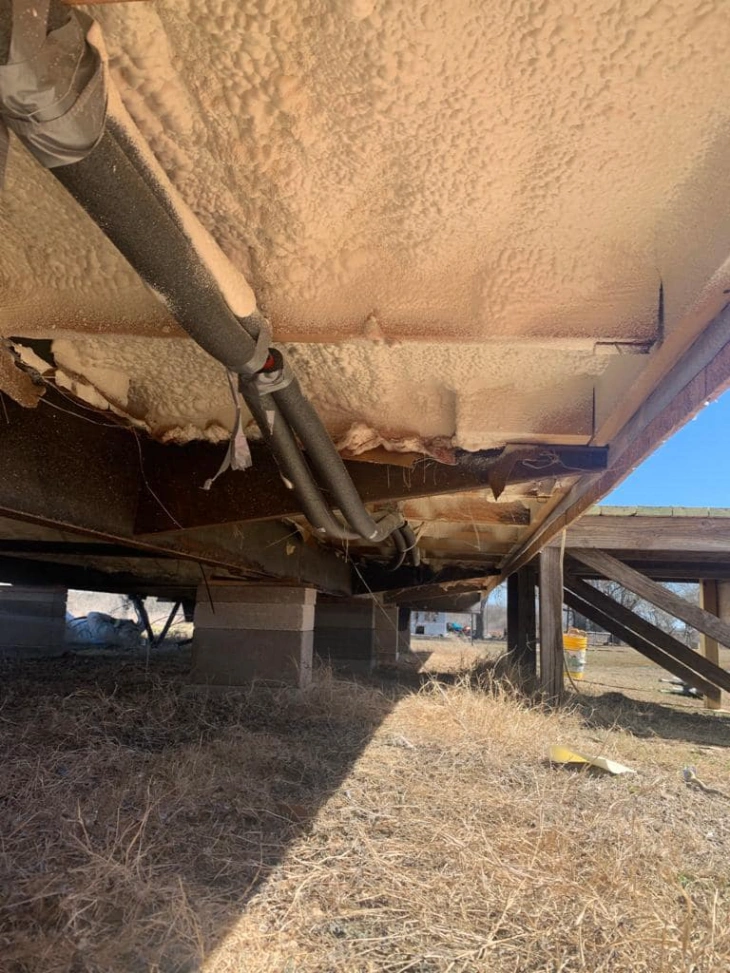
A damp, musty smell you can’t quite place, floors that feel chilly in the winter, no matter how high you turn up the heat, and energy bills that seem to climb year after year—these aren’t just quirks of an older home; they are often direct symptoms of a problem hiding right beneath your feet. The crawl space, an area most homeowners prefer to ignore, has a profound impact on your home’s overall health, comfort, and efficiency. When its insulation fails, the consequences ripple through the entire house, affecting everything from your wallet to your indoor air quality.
For years, the standard solution was to stuff fiberglass batts between the floor joists and hope for the best. But through countless hours spent in these tight, dark spaces, the team at H & R Spray Foam Insulation has seen firsthand why that old method often fails spectacularly. This guide is a collection of that field experience, designed to walk you through the entire issue from start to finish. We’ll cover why crawl space insulation fails, the serious effects it has on your home, and the modern, effective solutions that can permanently fix the problem.
In this comprehensive guide, you’ll learn:
This isn’t just about insulation. It’s about creating a healthier, more comfortable, and more efficient living environment from the ground up.
Before we can tackle the problems, it helps to understand the space itself. A crawl space is the shallow, unfinished area between the ground and the first floor of your home. Historically, they were built with vents under the assumption that allowing outside air to circulate would keep the area dry. We now know this approach often has the opposite effect, especially in humid climates.
There are two main types of crawl spaces:
The core job of insulation in either setup is to provide a thermal barrier. But as we’ll see, the unique challenges of the crawl space environment make it one of the most common points of failure in a home’s insulation system.
Crawl space insulation doesn’t just stop working for no reason. It’s usually a victim of its environment. Understanding the cause is the first step toward finding a lasting solution.
If there’s one villain in the story of crawl space insulation, it’s moisture. Ground moisture naturally wicks up into the crawl space, and in vented designs, humid summer air flows in, cools, and condenses on surfaces. This constant dampness is disastrous for many types of insulation.
Fiberglass insulation, the most common type found in older crawl spaces, acts like a sponge. As it absorbs moisture, it gets heavy, clumps together, and loses its insulating R-value. Eventually, the weight of the waterlogged insulation, combined with gravity, causes it to sag and pull away from the subfloor, often falling to the ground in heaps. Once this happens, it’s doing absolutely nothing to keep your floors warm. This damp material also becomes a perfect breeding ground for mold and mildew, which can release spores into the air you breathe. A report from the U.S. Environmental Protection Agency highlights how controlling moisture is the key to preventing mold growth in any part of a home.
To rodents, squirrels, and insects, that fluffy insulation under your house looks like a luxury hotel. It’s the perfect, pre-gathered material for building nests. Pests will tunnel through insulation, tear it down, and contaminate it with feces and urine. This not only destroys the insulation’s effectiveness but also creates a serious biohazard that can introduce bacteria and viruses into your home’s air. Once pests have made a home in your insulation, simply replacing it without addressing the pest entry points is a temporary fix at best.
Sometimes, insulation is doomed from the start. We often see installations with basic mistakes that drastically reduce effectiveness and lifespan.
Finally, even if insulation avoids moisture, pests, and installation errors, it still faces the inevitable forces of time and gravity. Over a decade or two, the constant pull of gravity can cause even well-installed fiberglass batts to loosen and sag. The material itself can become brittle and dusty, losing the loft that gives it its insulating power. It’s a slow process, but eventually, age catches up with traditional materials.
A failing insulation system under your home isn’t an isolated issue. It creates a chain reaction of problems that impact your comfort, health, and finances.
One of the most significant effects is energy loss. The “stack effect,” a basic principle of physics, causes your home to act like a chimney. Warm air rises and escapes through the upper levels, creating a vacuum that pulls cold, damp air up from the lowest point, the crawl space. If your crawl space is poorly insulated, your HVAC system has to work much harder to maintain the temperature you’ve set, leading to wasted energy and higher bills. According to the U.S. Department of Energy, insulating crawl spaces can save a significant amount on heating and cooling costs.
You might be surprised to learn how much of the air you breathe inside your home originates in the crawl space. Because of the stack effect, as much as 50% of the air on your first floor can infiltrate from below. If your crawl space is full of damp, moldy insulation, pest droppings, and dust, those contaminants are being pulled directly into your living area. This can trigger allergies, asthma, and other respiratory issues. It’s the reason why a musty smell from the crawl space should never be ignored. [Link to: How Your Crawl Space Affects Your Home’s Air Quality]
Key Takeaways: The Domino Effect of Failure. As these issues demonstrate, a problem in the crawl space rarely stays in the crawl space. The failure of insulation acts as the first domino, triggering a chain reaction that impacts your home’s energy consumption, air quality, and even its structural integrity over time. Understanding this connected system is key to recognizing why a comprehensive solution is so critical.
This is perhaps the most obvious symptom. If you have to wear slippers in your home year-round because the floors are freezing, poor crawl space insulation is almost certainly the culprit. The lack of a proper thermal barrier between the ground and your subfloor allows the cold to radiate straight through, making entire rooms feel drafty and uncomfortable.
This is the most serious long-term consequence. Chronic moisture in a crawl space doesn’t just ruin insulation; it also attacks the wooden structures of your home. Prolonged exposure to high humidity can cause wood rot in floor joists, support beams, and the subfloor. This can lead to sagging floors, structural instability, and extremely expensive repairs. Proper moisture management and insulation are preventative measures that protect the very bones of your house.
You don’t necessarily need to be an expert to diagnose a potential issue. A quick inspection (if you can do so safely) or keeping an eye out for certain red flags can tell you a lot.
| Symptom | What It Looks Like or Feels Like | What It Could Mean |
|---|---|---|
| Visual Inspection | Insulation is sagging, torn, or lying on the ground. You see dark stains or visible mold. | The insulation has failed due to moisture, pests, or age. It is no longer effective. |
| Musty Odors | A persistent damp, earthy, or moldy smell in the house, often strongest on the first floor. | Moisture is present, likely leading to mold or mildew growth in the insulation and wood. |
| High Energy Bills | Your heating and cooling costs are consistently higher than expected or are rising over time. | Your HVAC system is overworking to compensate for heat loss through the floor. |
| Pest Activity | You find droppings, hear scratching sounds, or see evidence of nests in the crawl space. | Pests have invaded and are likely using your insulation for shelter, destroying it in the process. |
| Cold Floors | Floors, especially over the crawl space, are noticeably cold to the touch, even when the heat is on. | There is no effective thermal barrier between your living space and the cold crawl space. |
| High Indoor Humidity | The air inside your home feels clammy or damp, and you have condensation on your windows. | Excess moisture is being pulled up from the crawl space, affecting your entire home’s environment. |
Expert Tip: When you look in your crawl space, pay close attention to the rim joist area (the wooden perimeter that sits on top of the foundation wall). This is a major source of air leakage and is often poorly insulated, even if the rest of the crawl space looks okay.
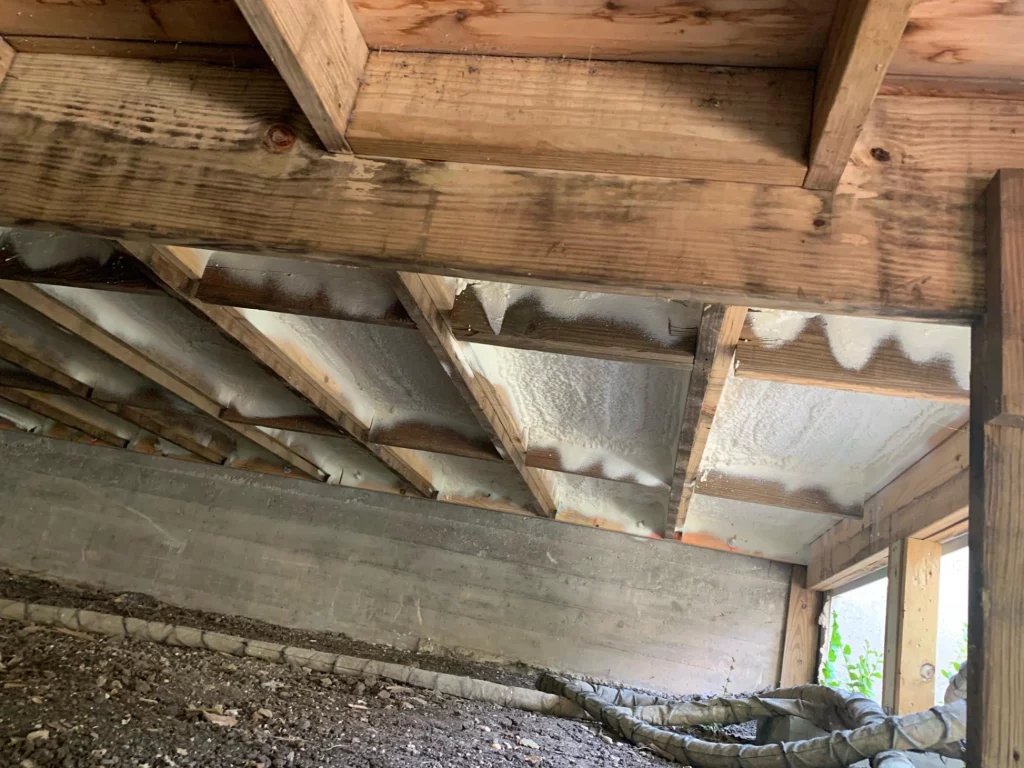
Simply tearing out the old, failed insulation and replacing it with the same material is just resetting the clock on the problem. A permanent solution requires a systematic approach that addresses the root causes. For many homes, this means moving away from the old vented crawl space design.
The first step is always a thorough clean-out. This involves:
With a clean slate, the next priority is to make the crawl space dry and unattractive to pests. This is typically done through encapsulation.
[Image: A bright, clean encapsulated crawl space with a white vapor barrier on the walls and floor.]
Once the space is clean and dry, it’s time to insulate. In a modern encapsulated crawl space, the best practice is to insulate the foundation walls, not the ceiling. This brings the crawl space inside the home’s thermal boundary.
Expert Tip: Insulating the walls instead of the floor joists protects your plumbing from freezing in the winter, as the pipes are now in a conditioned space.
Here’s a look at the best materials for the job:
| Insulation Type | Pros | Cons | Best Use in Crawl Space |
|---|---|---|---|
| Closed-Cell Spray Foam | Excellent R-value per inch, acts as an air and vapor barrier, waterproof, and adds structural rigidity. | Higher initial cost, requires professional installation. | Applied directly to foundation walls and rim joists for a complete, seamless seal. |
| Rigid Foam Board | Good R-value, waterproof, easy to cut and fit, and can be a DIY project for some. | Seams must be meticulously taped to create an air seal, and can be damaged by pests if not protected. | Mechanically fastened to foundation walls. |
| Fiberglass Batts | Low initial cost, widely available. | Absorbs moisture easily, loses R-value when wet, prone to sagging and pest damage. | Not recommended for foundation walls; only usable in very dry, clean, and pest-free vented crawl space ceilings. |
For crawl spaces, moisture-resistant materials are non-negotiable. That’s why closed-cell spray foam and rigid foam board are the clear winners. They don’t absorb water, so they won’t grow mold or lose their insulating power in a damp environment. H & R Spray Foam Insulation often recommends closed-cell spray foam because it creates a perfect monolithic seal that addresses both insulation and air leakage in one step. [Link to: Foam Board vs. Spray Foam Insulation: A Head-to-Head Comparison]
Expert Tip: Check your local building codes for R-value requirements. The amount of insulation you need can vary based on your climate zone. The 2021 International Energy Conservation Code provides a map and table with recommended insulation levels.
Your crawl space is the foundation of a healthy and efficient home. Ignoring problems with its insulation can lead to years of high energy bills, poor air quality, and uncomfortable rooms. As we’ve seen, the causes are usually tied to moisture and outdated methods, and the effects are felt throughout the entire house.
The solution isn’t just about replacing old material; it’s about upgrading to a modern system that controls moisture, air, and temperature. By cleaning out the space, sealing it off from the ground and outside air, and using the right moisture-resistant insulation on the foundation walls, you can permanently solve these issues. This guide should serve as your reference for understanding the problem and navigating the path to a durable, effective solution.
A crawl space can be a challenging environment to work in, and a proper insulation and encapsulation project requires attention to detail. If you suspect you have a problem or want a professional assessment, the experts at H & R Spray Foam Insulation are here to help. With years of experience transforming damp, inefficient crawl spaces into clean, dry, and healthy parts of the home, we can provide a lasting solution. Contact H & R Spray Foam Insulation today at (979) 325-2419 or send an email to [email protected] for a thorough evaluation.
In modern construction, insulating the foundation walls as part of a sealed, unvented crawl space is the preferred method. This brings the crawl space into the conditioned envelope of the home, which protects pipes and makes for a healthier, more efficient system. Insulating the ceiling is the traditional method for vented crawl spaces, but it is more prone to moisture and pest issues.
It can be hazardous. Old insulation may contain mold spores, dust, pest droppings, and even asbestos in very old homes. It’s recommended to wear a respirator, gloves, and full-body protection. For extensive contamination, professional removal is the safest option.
This depends on your climate zone and local building codes. Generally, R-values between R-13 and R-19 are common for foundation walls. The higher the R-value, the greater the insulating power.
Costs vary widely based on the size of the crawl space, the type of insulation chosen, the extent of cleanup needed, and whether you are also encapsulating the space. Spray foam is typically more expensive upfront than foam board but can provide better long-term performance. [Link to: Understanding the Cost of Crawl Space Repair]
In most climates, yes. Even with a vapor barrier, some moisture can find its way in. A dehumidifier is the final piece of the puzzle that ensures the relative humidity is kept at a consistent, safe level (usually around 50%) to prevent any possibility of mold growth.
This is strongly discouraged in a crawl space. Old insulation is likely compressed, dirty, and potentially moldy. Covering it up just traps the problem. A proper job always starts with a complete removal of the old material.

 EN
EN