
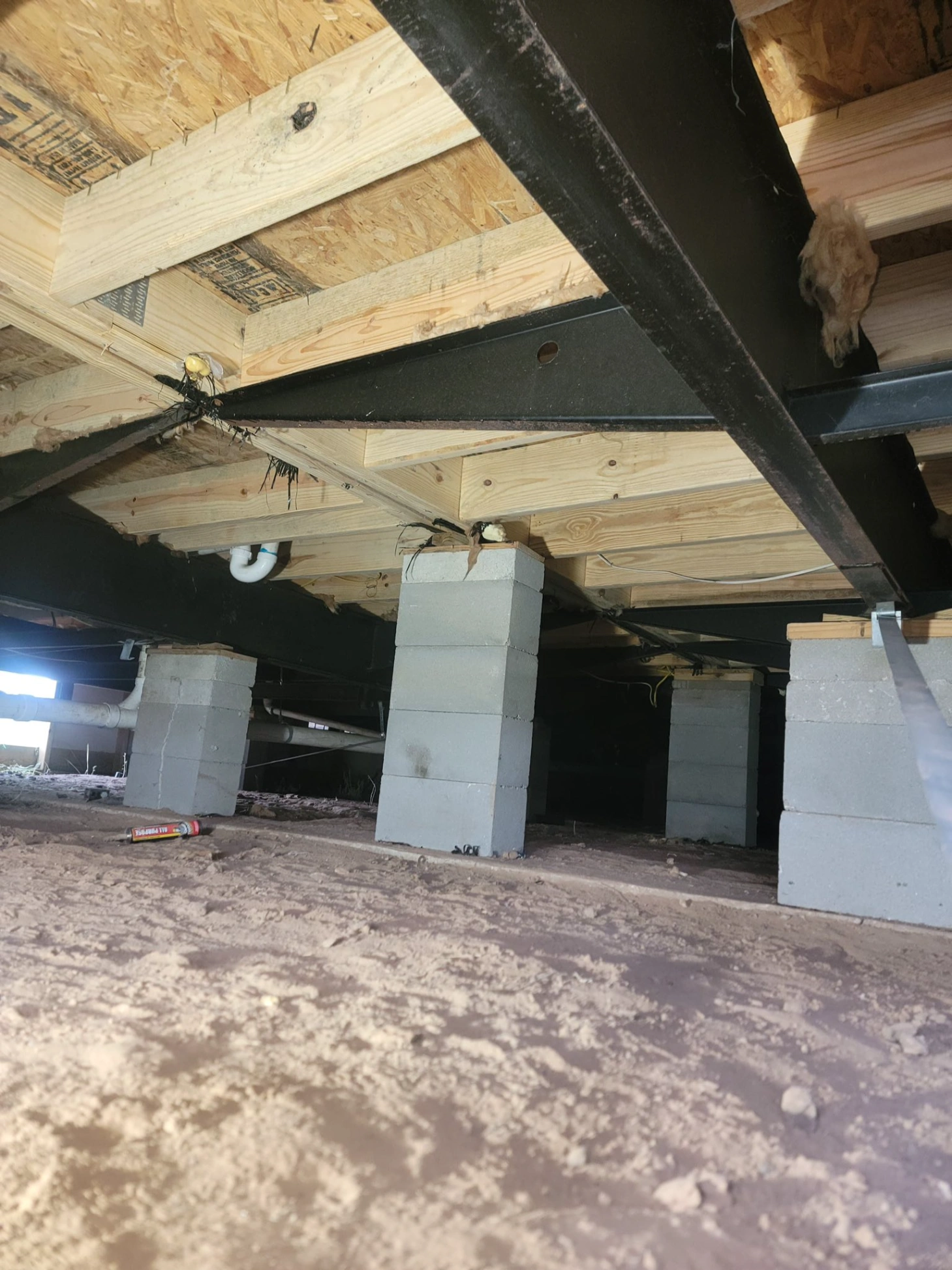
Crawl space insulation effectively reduces outdoor noise by absorbing sound waves and dampening vibrations before they enter your living areas. Dense materials like closed-cell spray foam and mineral wool create a physical barrier that blocks airborne sounds, such as traffic and conversation. At the same time, their composition absorbs sound energy, converting it into a small amount of heat and stopping it from traveling through the floor joists into your home. This process addresses both airborne and structure-borne noise, creating a noticeably quieter indoor environment.
This article provides a detailed look at how different insulation materials manage sound, the specific noise challenges in the Buda area, and what factors to consider for your home. With years of practical experience in residential insulation, H & R Spray Foam Insulation has seen firsthand how a properly treated crawl space can improve a home’s comfort and tranquility.
Unwanted noise typically enters a house through two primary pathways: the air and the building’s structure. An uninsulated crawl space acts as a large, hollow chamber that can amplify sounds coming from outside.
Airborne Noise consists of sound waves that travel through the air. Common sources include traffic, lawnmowers, airplanes, and neighbors talking. According to experts at Commercial Acoustics®, these sound waves can easily pass through vents, gaps in the foundation, and thin building materials.
Structure-Borne Noise is sound that travels as vibrations through solid materials. A heavy truck driving down the road can create vibrations in the ground that move through your home’s foundation and up into the floor joists. The floor then radiates this energy as audible, low-frequency sound.
Crawl space insulation solutions addresses both types of noise. It seals the air leaks that allow airborne sound to enter and creates a dense barrier that dampens structure-borne vibrations.
Insulation materials reduce noise through two main actions: absorption and blocking. The effectiveness of a material is often measured using two key ratings:
Different insulation types have distinct acoustic properties. Porous materials are excellent at absorbing sound, while dense, heavy materials are better at blocking it. An analysis from Crawl Space Ninja highlights that specialized soundproof insulation often has greater density and mass than standard thermal insulation.
| Insulation Type | Primary Acoustic Function | Common NRC Rating | Common STC Rating (in a system) | Moisture Resistance |
|---|---|---|---|---|
| Closed-Cell Spray Foam | Blocking & Air Sealing | 0.70 – 0.75 | High (45-55) | Excellent |
| Mineral Wool | Absorption | 0.95 – 1.05 | High (45-52) | Good |
| Fiberglass Batts | Absorption | 0.80 – 0.95 | Moderate (36-42) | Poor to Fair |
| Rigid Foam Board | Blocking | Low (~0.20) | Moderate (35-40) | Excellent |
To maximize the performance of any of these materials, however, one preparatory step is crucial.
Bonus Tip: For maximum noise reduction, air sealing the crawl space is just as important as insulating it. Before any insulation is installed, sealing all cracks in the foundation, gaps around pipes, and old vents prevents airborne sound from bypassing the insulation entirely.
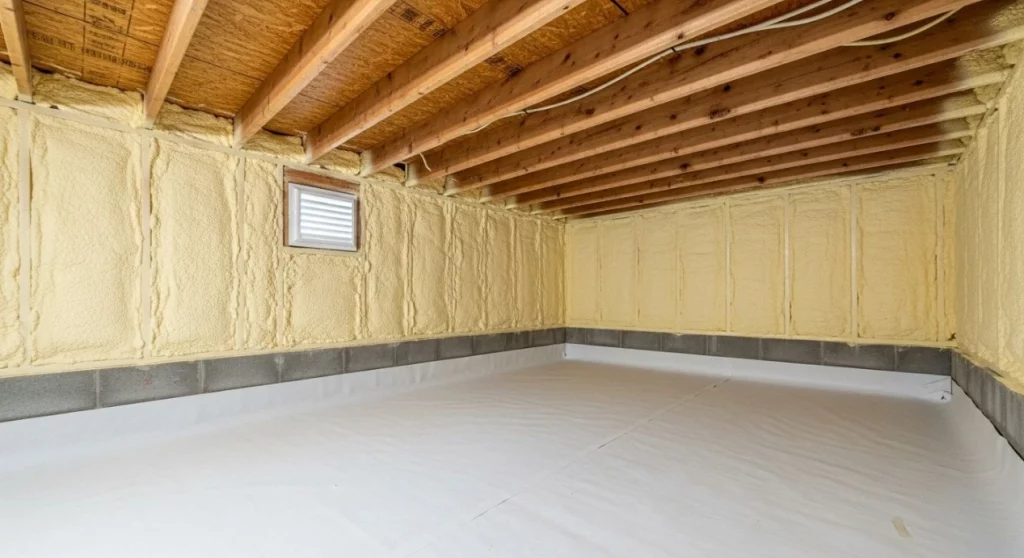
As Texas communities like Buda continue to grow, outdoor noise levels from various sources are also on the rise. A study published on ResearchGate about traffic-related noise in Texas confirms that expanding road networks contribute significantly to noise pollution in suburban areas. Common sources of noise pollution in the region include:
Properly insulating a crawl space helps create a buffer against these specific intrusions. The dense barrier of insulation works to quiet the persistent hum of traffic, while the absorptive qualities can dull the sharper sounds from nearby activities.
Choosing the right insulation requires looking at more than just its sound-dampening qualities. Several factors will influence the best solution for your home.
Are you dealing with the deep rumble of highway traffic or the higher-pitched sounds of neighbors’ conversations? Low-frequency sounds are generally harder to block and require dense, heavy materials like closed-cell spray foam. High-frequency sounds are more effectively managed by absorptive materials like mineral wool or open-cell foam.
Is your crawl space vented or unvented? Does it have issues with moisture or pests? For damp or humid crawl spaces, closed-cell spray foam or rigid foam boards are ideal because they act as a vapor barrier and do not support mold growth. Fiberglass batts, on the other hand, can absorb moisture and lose their effectiveness if they get wet.
It’s important to ensure that any insulation work complies with local building codes in Buda and Hays County. These codes specify requirements for insulation levels, vapor barriers, and fire safety, which can affect your choice of materials and installation methods.
Bonus Tip: A professional evaluation can help identify the primary noise sources and pathways into your home. This allows for a more targeted and effective sound reduction strategy instead of a one-size-fits-all approach.
Insulating your crawl space is a highly effective strategy for reducing the intrusion of outdoor noise in your Buda home. By choosing materials that absorb sound waves and block vibrations, you can significantly lower the impact of traffic, construction, and other neighborhood sounds. To ensure you select the best long-term solution, it is vital to first carefully assess your home’s specific needs, the type of noise you want to reduce, and your crawl space’s current condition.
To understand the most effective insulation options for your home’s unique situation, a detailed evaluation is the best first step. The team at H & R Spray Foam Insulation can provide a thorough assessment of your crawl space and recommend a tailored solution to meet your sound reduction goals. For more information or to schedule a consultation, you can reach out via email at [email protected] or by calling (979) 325-2419.
Vented crawl spaces have direct openings to the outside, which serve as clear pathways for airborne noise to enter. Sealing these vents and converting the crawl space to an unvented, conditioned space as part of an encapsulation project is one of the most effective ways to reduce outdoor noise.
Yes, a hybrid approach can be very effective. For example, rigid foam board could be installed on the foundation walls to provide a thermal and moisture barrier, with mineral wool or spray foam applied in the floor joist cavities above to maximize sound absorption.
The process starts with cleaning and preparing the crawl space, which includes removing old, damaged insulation and addressing any moisture or pest issues. Then, all air leaks are sealed. Finally, the new insulation is installed, either by spraying it onto the walls and rim joists or by fitting batts between the floor joists.
The primary considerations are cost and the temporary disruption during installation. If improper materials are used in a damp crawl space, it could potentially trap moisture. This is why a professional assessment and correct material selection are so important.

 EN
EN